Whatever affects one component of an ecosystem ripples throughout the entire environment. The intricate interconnections within ecosystems call for a comprehensive, interdisciplinary approach to research and design. By 2050, an estimated 68% of the world’s population will live in urban areas, often contributing to the disruption and displacement of wildlife. As architects, designers, makers, and activists, our role should go beyond addressing human needs; it is to reimagine the built environment in ways that foster coexistence among all species.
The survival of ecosystems on a planetary scale depends on our ability to preserve and also design spaces and worlds that honor the delicate interconnectedness of all life forms. The Atlas of Habitats, shaped through the collective efforts of students, educators, eco-guards, beekeepers, and carpenters in Austria and Liberia, serves as an ever-evolving catalogue. Our aim is for this Atlas to inspire activists, makers, stakeholders, designers and architects in creating spaces that nurture and support life in all its diversity.
We’ve mastered the skies and the seas, yet the art of truly living together still eludes us. As we explore the hidden connections that shape our world, we hope to inspire a deeper understanding and respect for all beings, paving the way for a shared future.
Philipp Reinsberg
He is an architect, researcher, and lecturer with a focus on ecology and wood technology. Over the last years he has been involved in various interdisciplinary projects. Since 2016, he works regularly for the United Nation Industrial Development Organization as a consultant for wood technology and design.
Magdalena Pietryszyn
Magdalena Pietryszyn is an architect, educator, and urban designer specializing in material-driven design. She leads projects at the intersection of material science, ecology, and urban planning and has worked across diverse environments, from Sub-Saharan Africa to Nordic cities.
Maria Buerger
Maria Buerger studied communication design at the University of Applied Sciences in Berlin. She is currently enrolled in the double degree master's program “Global Challenges and Sustainable Development” at the University of Applied Arts Vienna and Tongji University Shanghai. Her focus lies on the search for timeless and resourceful communication systems. Since 2024 she is part of [A]FA Atlas of Habitats team.
James Fallah
James Fallah studies Forestry at the University of Liberia. He is currently a vocational instructor at the Carpentry and Joinery Technology Section at the Booker Washington Institute (BWI) in Kakata, Liberia and assisted UNIDO with the implantation on different carpentry trainings since 2023.
Boakai Blama Kamara
Boakai Blama Kamara holds a Bachelor's in Public Administration, a BSc in Electronics, and a Diploma in Carpentry and Electricity. He is a Trainer and Head of Carpentry and Electricity at the Ministry of Education's Accelerated Vocational Training program, and Chairman of Electronics Engineering at Salvation Army Polytechnic, Liberia.
Apoorva Thapa
Apoorva Thapa is a master’s of architecture student in Studio Chermayeff at the University of Applied Arts Vienna. Originally from Kathmandu, Nepal, he previously studied architecture at the University of Florida. Apoorva has actively contributed to the [A]FA Atlas of Habitats lab since Spring 2024 and took on the role of student assistant in fall 2024.
The project was created through a joint effort between the University of Applied Arts Vienna (Die Angewandte), [Applied] Foreign Affairs, Institute of Architecture Vienna, and the United Nation Industrial Development Organization (UNIDO) team.
It took place within the framework of the Angewandte Program for Inter- and Transdisciplinary Projects in Art and Research (INTRA) and is funded by the Austrian Federal Ministry of Education, Science and Research and the [Applied] Foreign Affairs (Institute of Architecture). The Atlas was conceptualized by Philipp Reinsberg and Magdalena Pietryszyn as part of an INTRA peer-review grant and developed with [Applied] Foreign Affairs (Institute of Architecture) Baerbel Mueller (head), Apoorva Thapa, Maria Bürger, designed by EXEX Studio Vienna (AUS) and programmed by Pointerstudio, The Hague (NLD).
The United Nation Industrial Development Organization (UNIDO) and the Youth Rising Project supported us throughout the research in Liberia and facilitated meetings with vocational training teachers in Monrovia and Kakata. UNIDO linked us to James Fallah and Boakia Kamara, two teachers and research investigators in Liberia. Caroline General, Honorary consul in Liberia for Austria, gave us insights about Liberia and first-hand recommendations on how to structure and organize the two research trips to Liberia.
But we also want to specially thanks to further collaborator and supporters:
Helga Aichmaier, Support Art and Research, University of Applied Arts Vienna
Kent Bubbs Jr., Universal Outreach Foundation, Liberia
Alexander Damianisch, Support Art and Research, University of Applied Arts Vienna
Caroline General, Honorary consul in Liberia for Austria
Alfred Jakoblich, Bird photographer, Austria
Seunghwan Jung, United Nation Industrial Development Organization, Austria
Helga Kainz, Beekeeper, Vienna, Austria
Christoph Kaltenbrunner, DAE, University of Applied Arts Vienna
Galo Moncayo, Energy Design Department, University of Applied Arts in Vienna
Rogers Ndege, United Nation Industrial Development Organization, Liberia
Stavros Papastravou, World Bank (former UNIDO)
Christian Schlager EXEX Studio, Austria
Benjamin Seaman, Bird life, Austria
Habtamu Sibthat, UNIDO Liberia
Galo Moncayo, Energy Design, University of Applied Arts in Vienna
and Institute of Architecture, University of Applied Arts in Vienna
The Atlas of Habitats is a dynamic website and database designed to foster new connections between the unique worlds of different beings. This evolving digital platform gathers data on habitats from unseen perspectives, offering users a playful and exploratory experience in uncovering insights that are often invisible to the naked eye.
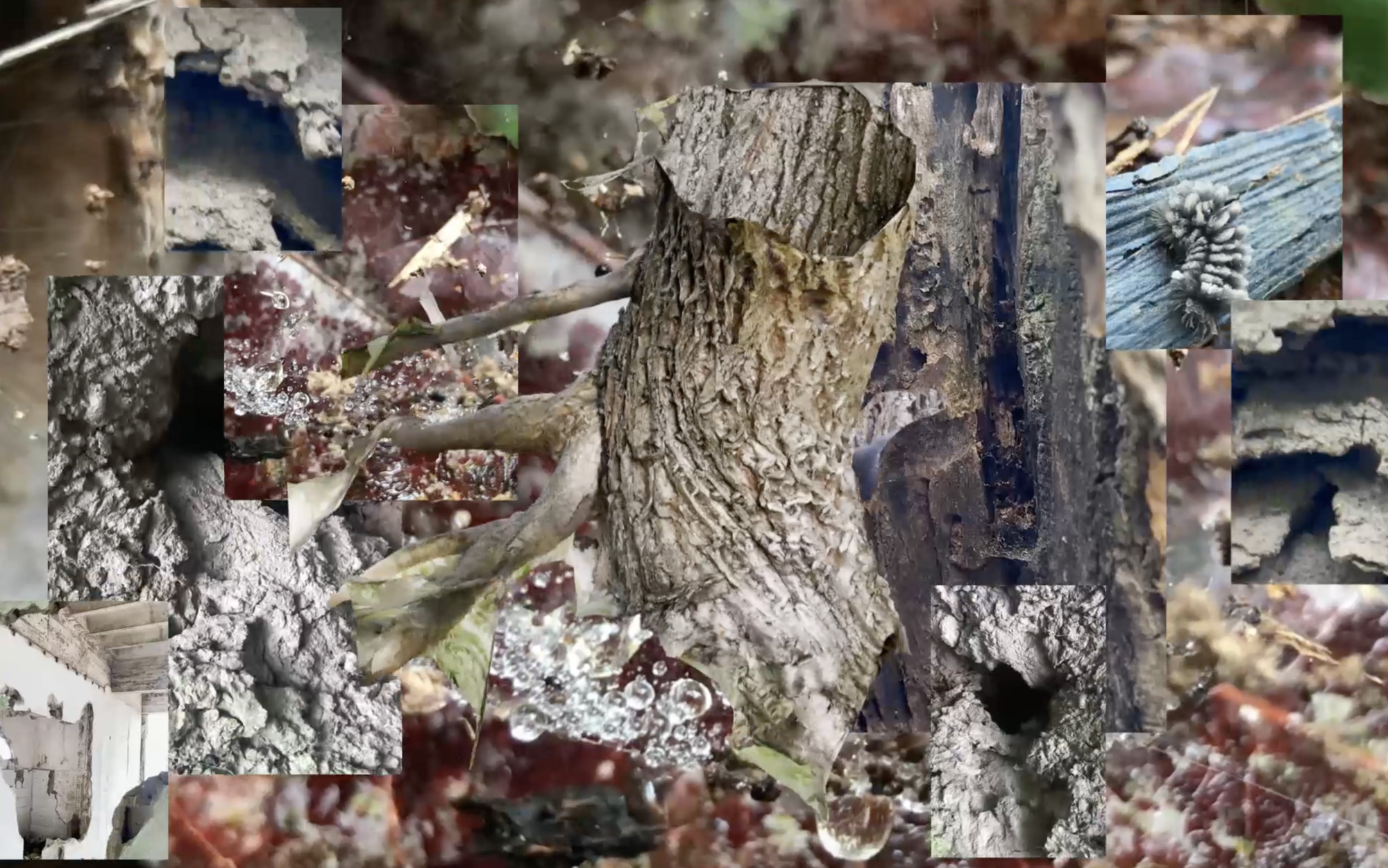
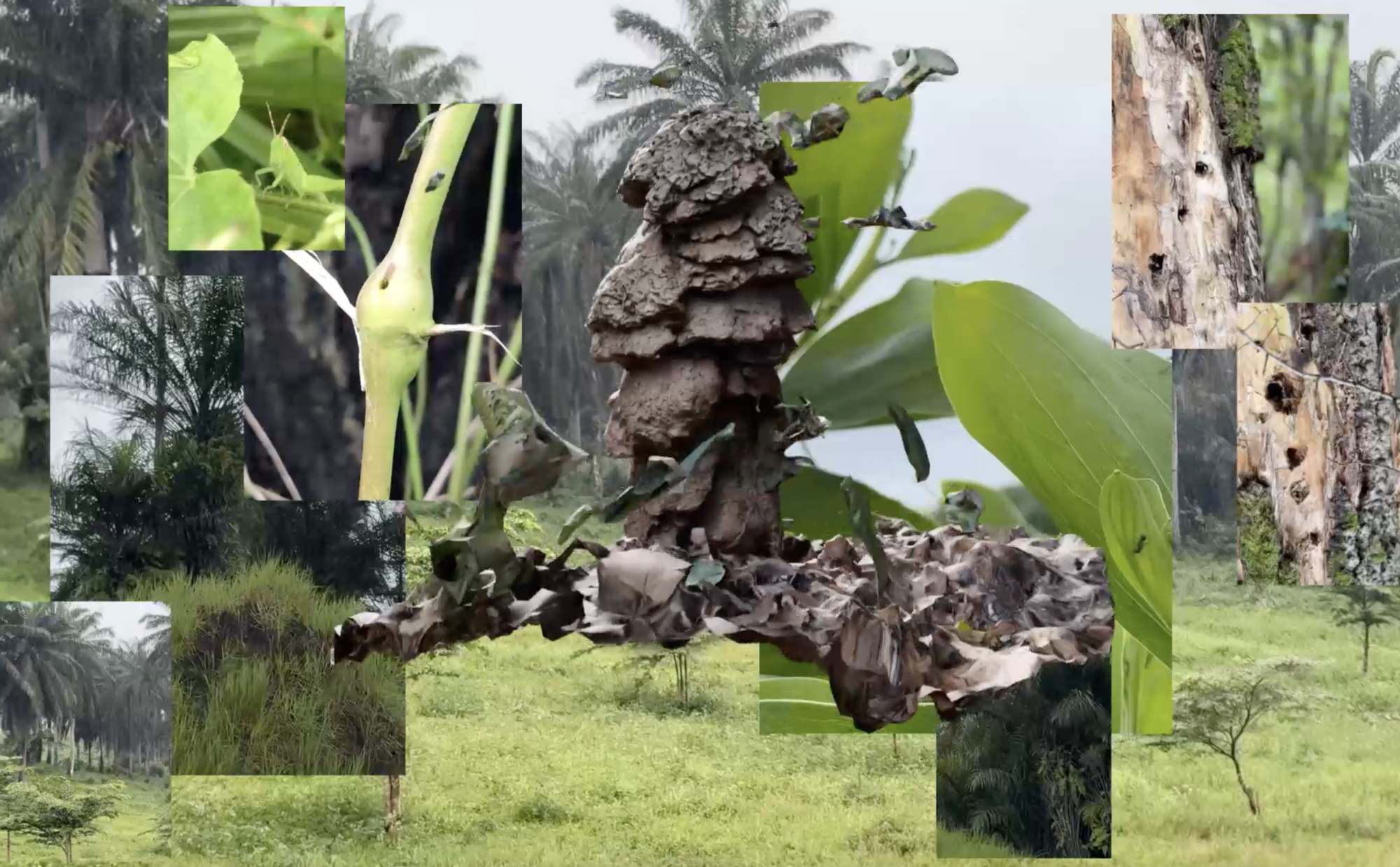
The project team conducted an intensive, dual-location research process, employing methods such as 3D scanning, endoscopy, thermal imaging, measurement, and filming to capture natural habitats in forests, lakes, the Atlantic Ocean, and abandoned places. These efforts were supplemented by online research and supported by image detection through ChatGPT for habitat identification. The result is a rich and multifaceted dataset that invites users to engage with the living world in new ways.
Users can navigate the Atlas by applying various filters and categories—such as material, texture, height, size, species type, location, construction technique, and inhabitation patterns. These filters can be combined in different ways, allowing for an exploration that reveals unexpected interrelations and unforeseen links between habitats.
The Atlas not only captures physical characteristics but also delves into the underlying tectonics and microclimates that shape these habitats. The platform provides insights into how materials and construction techniques influence the living conditions and spatial organization of different species in the artificial and natural environments.
Through this interactive approach, the Atlas encourages a personalized and dynamic exploration, guiding users to find connections that extend beyond traditional ecological boundaries.
Whatever affects one component of an ecosystem ripples throughout the entire environment. The intricate interconnections within ecosystems call for a comprehensive, interdisciplinary approach to research and design. By 2050, an estimated 68% of the world’s population will live in urban areas, often contributing to the disruption and displacement of wildlife. As architects, designers, makers, and activists, our role should go beyond addressing human needs; it is to reimagine the built environment in ways that foster coexistence among all species.
The survival of ecosystems on a planetary scale depends on our ability to preserve and also design spaces and worlds that honor the delicate interconnectedness of all life forms. The Atlas of Habitats, shaped through the collective efforts of students, educators, eco-guards, beekeepers, and carpenters in Austria and Liberia, serves as an ever-evolving catalogue. Our aim is for this Atlas to inspire activists, makers, stakeholders, designers and architects in creating spaces that nurture and support life in all its diversity.
We’ve mastered the skies and the seas, yet the art of truly living together still eludes us. As we explore the hidden connections that shape our world, we hope to inspire a deeper understanding and respect for all beings, paving the way for a shared future.
Philipp Reinsberg
He is an architect, researcher, and lecturer with a focus on ecology and wood technology. Over the last years he has been involved in various interdisciplinary projects. Since 2016, he works regularly for the United Nation Industrial Development Organization as a consultant for wood technology and design.
Magdalena Pietryszyn
Magdalena Pietryszyn is an architect, educator, and urban designer specializing in material-driven design. She leads projects at the intersection of material science, ecology, and urban planning and has worked across diverse environments, from Sub-Saharan Africa to Nordic cities.
Maria Buerger
Maria Buerger studied communication design at the University of Applied Sciences in Berlin. She is currently enrolled in the double degree master's program “Global Challenges and Sustainable Development” at the University of Applied Arts Vienna and Tongji University Shanghai. Her focus lies on the search for timeless and resourceful communication systems. Since 2024 she is part of [A]FA Atlas of Habitats team.
James Fallah
James Fallah studies Forestry at the University of Liberia. He is currently a vocational instructor at the Carpentry and Joinery Technology Section at the Booker Washington Institute (BWI) in Kakata, Liberia and assisted UNIDO with the implantation on different carpentry trainings since 2023.
Boakai Blama Kamara
Boakai Blama Kamara holds a Bachelor's in Public Administration, a BSc in Electronics, and a Diploma in Carpentry and Electricity. He is a Trainer and Head of Carpentry and Electricity at the Ministry of Education's Accelerated Vocational Training program, and Chairman of Electronics Engineering at Salvation Army Polytechnic, Liberia.
Apoorva Thapa
Apoorva Thapa is a master’s of architecture student in Studio Chermayeff at the University of Applied Arts Vienna. Originally from Kathmandu, Nepal, he previously studied architecture at the University of Florida. Apoorva has actively contributed to the [A]FA Atlas of Habitats lab since Spring 2024 and took on the role of student assistant in fall 2024.
The project was created through a joint effort between the University of Applied Arts Vienna (Die Angewandte), [Applied] Foreign Affairs, Institute of Architecture Vienna, and the United Nation Industrial Development Organization (UNIDO) team.
It took place within the framework of the Angewandte Program for Inter- and Transdisciplinary Projects in Art and Research (INTRA) and is funded by the Austrian Federal Ministry of Education, Science and Research and the [Applied] Foreign Affairs (Institute of Architecture). The Atlas was conceptualized by Philipp Reinsberg and Magdalena Pietryszyn as part of an INTRA peer-review grant and developed with [Applied] Foreign Affairs (Institute of Architecture) Baerbel Mueller (head), Apoorva Thapa, Maria Bürger, designed by EXEX Studio Vienna (AUS) and programmed by Pointerstudio, The Hague (NLD).
The United Nation Industrial Development Organization (UNIDO) and the Youth Rising Project supported us throughout the research in Liberia and facilitated meetings with vocational training teachers in Monrovia and Kakata. UNIDO linked us to James Fallah and Boakia Kamara, two teachers and research investigators in Liberia. Caroline General, Honorary consul in Liberia for Austria, gave us insights about Liberia and first-hand recommendations on how to structure and organize the two research trips to Liberia.
But we also want to specially thanks to further collaborator and supporters:
Helga Aichmaier, Support Art and Research, University of Applied Arts Vienna
Kent Bubbs Jr., Universal Outreach Foundation, Liberia
Alexander Damianisch, Support Art and Research, University of Applied Arts Vienna
Caroline General, Honorary consul in Liberia for Austria
Alfred Jakoblich, Bird photographer, Austria
Seunghwan Jung, United Nation Industrial Development Organization, Austria
Helga Kainz, Beekeeper, Vienna, Austria
Christoph Kaltenbrunner, DAE, University of Applied Arts Vienna
Galo Moncayo, Energy Design Department, University of Applied Arts in Vienna
Rogers Ndege, United Nation Industrial Development Organization, Liberia
Stavros Papastravou, World Bank (former UNIDO)
Christian Schlager EXEX Studio, Austria
Benjamin Seaman, Bird life, Austria
Habtamu Sibthat, UNIDO Liberia
Galo Moncayo, Energy Design, University of Applied Arts in Vienna
and Institute of Architecture, University of Applied Arts in Vienna
The Atlas of Habitats is a dynamic website and database designed to foster new connections between the unique worlds of different beings. This evolving digital platform gathers data on habitats from unseen perspectives, offering users a playful and exploratory experience in uncovering insights that are often invisible to the naked eye.
The project team conducted an intensive, dual-location research process, employing methods such as 3D scanning, endoscopy, thermal imaging, measurement, and filming to capture natural habitats in forests, lakes, the Atlantic Ocean, and abandoned places. These efforts were supplemented by online research and supported by image detection through ChatGPT for habitat identification. The result is a rich and multifaceted dataset that invites users to engage with the living world in new ways.
Users can navigate the Atlas by applying various filters and categories—such as material, texture, height, size, species type, location, construction technique, and inhabitation patterns. These filters can be combined in different ways, allowing for an exploration that reveals unexpected interrelations and unforeseen links between habitats.
The Atlas not only captures physical characteristics but also delves into the underlying tectonics and microclimates that shape these habitats. The platform provides insights into how materials and construction techniques influence the living conditions and spatial organization of different species in the artificial and natural environments.
Through this interactive approach, the Atlas encourages a personalized and dynamic exploration, guiding users to find connections that extend beyond traditional ecological boundaries.